When I first met “Taylor” (name changed), she seemed like the perfect partner: successful career, warm personality, stable life.
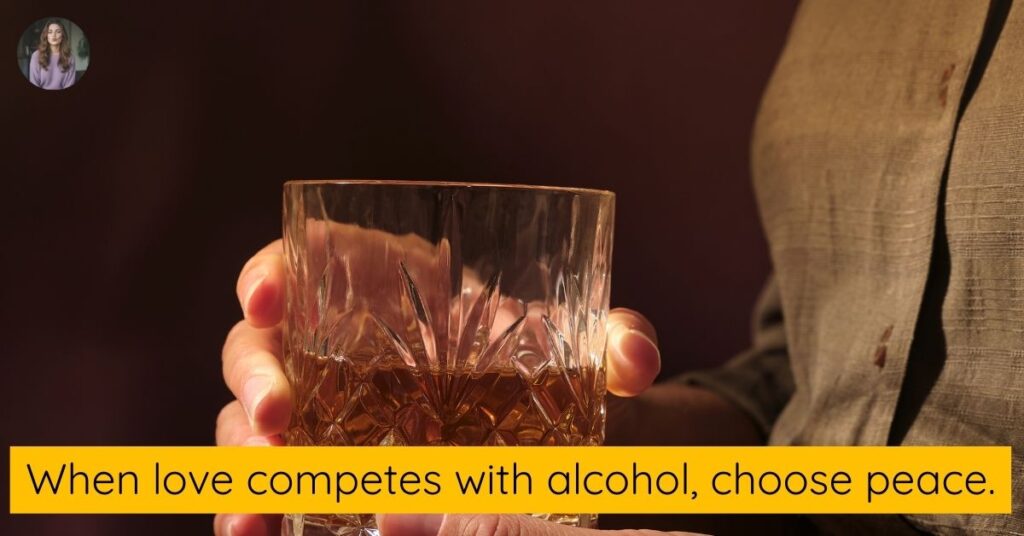
Yet every evening she would pour a drink—and then another and another—until she passed out by 9 p.m. I watched the golden-recipe of a romantic connection twist into a nightly routine where I came second to the bottle.
If you’re dating someone who functions well on the surface while drinking heavily beneath it—especially when that someone is a woman who keeps it together by day but drinks by night—you’re wrestling with a dilemma that cuts to the heart of trust, intimacy and self-respect.
I’m speaking to you as a relationship expert: the question you asked—Should you just cut ties? Is change possible?—is both urgent and valid.
Understanding the “Functioning Alcoholic” in Relationships
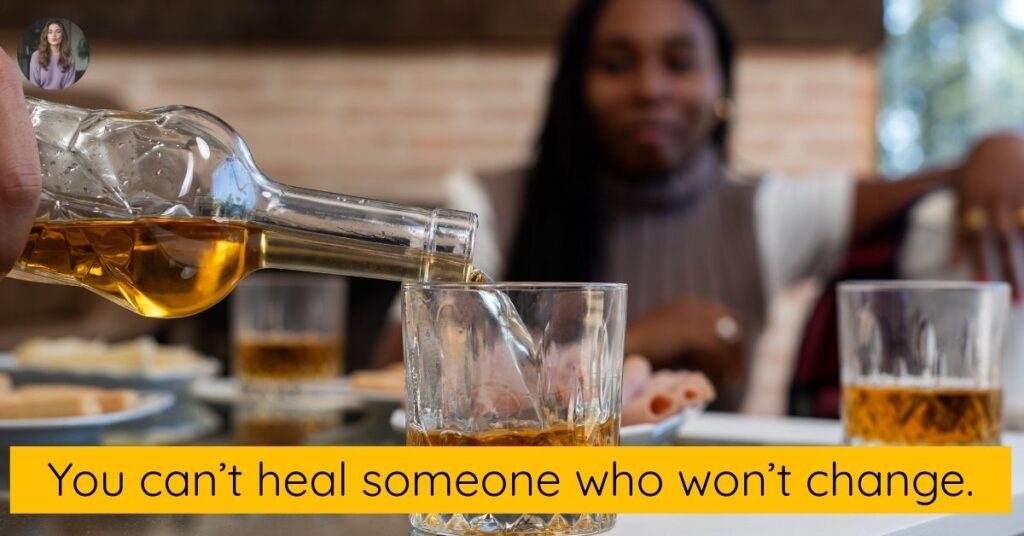
You describe your partner as functioning: she has her job, her space, she is kind, not verbally abusive. Yet the consumption—a pint of vodka or ten beers every night—is more than just high-usage: it fits the pattern of a “high-functioning alcoholic.”
According to The Recovery Village, “high-functioning alcoholics … hold down jobs and maintain households but nonetheless struggle with alcohol dependence.”
This matters because the outward appearance of control often masks deep relationship risks: neglect of emotional connection, erosion of trust, being emotionally sidelined in favour of alcohol.
What the Statistics Tell Us
- Among adult women in the U.S., about 13 % engage in binge-drinking and around 9 % have an alcohol use disorder (AUD); among women aged 18-25 the figure climbs to 17 %.
- Research on relationship functioning shows that heavy alcohol use causes major stress in partnerships: partners of alcohol users report higher levels of depressive symptoms, emotional burden and relationship dissatisfaction.
- Gender-specific data suggest women can experience rapid escalation of alcohol-related harm (“telescoping effect”), making heavy use more dangerous even if less visible.
These statistics are not about your specific case—but they shine a light on the larger behavioural patterns and underlying risks.
Why It’s About Relationship Problems—not Just Her Drinking
You mention: the nights together are planned around her drinking and passing out by 9 p.m.; you feel your own drinking rising while you’re with her; you feel turned off and stuck.
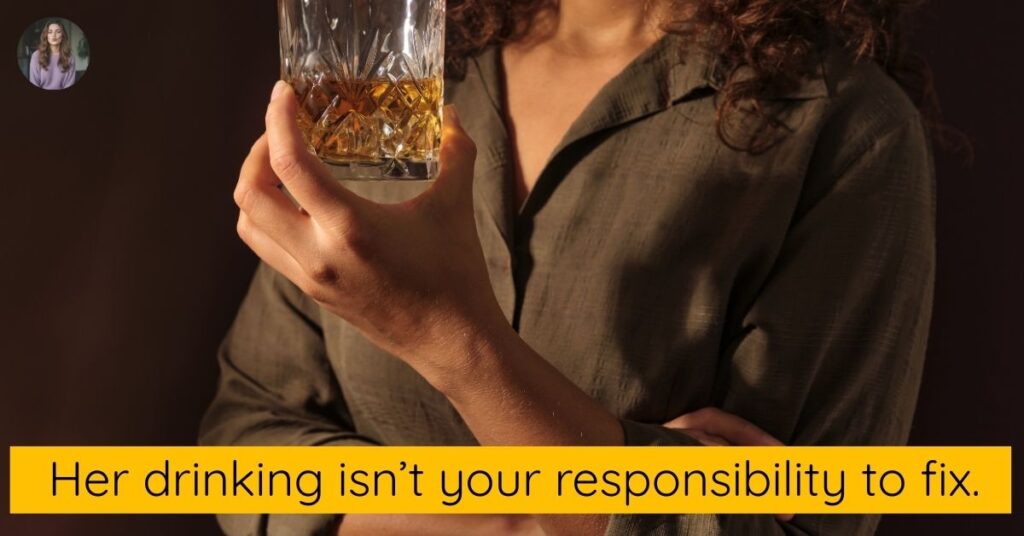
This isn’t simply a health concern or a “she needs help” scenario—it’s a relationship concern that affects you. When a partner’s alcohol use dictates time, intimacy, emotional availability, it becomes a relational problem.
According to the Addiction Center: “Alcohol abuse … can lead to a lack of intimacy and an increase in infidelity and domestic problems.”
As a relationship expert I emphasise: your core concern isn’t only “Will she stop drinking?” but “Can we build a relationship where I feel seen, connected and safe?”
If the answer is no—or if the drinking makes the answer no—it may be time to re-evaluate.
Is There Hope for Change? And What That Means for Yo
Yes—there is hope for change. But hope is not certainty. And if you stay, your effectiveness in helping her is strongly tied to your doing your own work, setting boundaries, and building clarity.
Based on what you shared and what the evidence says:
What you can do (as the partner):
- Have a calm conversation: “I’ve noticed when you drink heavily every night, our time together becomes …” Avoid accusatory language; lean into your feelings and the relationship.
- Encourage professional help: The functional alcoholic often denies the problem because their job, home, etc still work.
- Protect your emotional health: Do not enable or organise life around her drinking or let your own drinking increase to match hers.
- Define boundaries: For example: “If you drink tonight past X, I’ll sleep elsewhere” or “If you pass out by 9, I’m leaving at 9:30 for my own plans.”
- Decide what you will accept and what you won’t. If the pattern continues unchanged after you’ve communicated, remember this is your relationship, not only her drinking.
What you cannot control:
- You cannot force change. She must choose it.
- You cannot make the drinking “okay” by staying deferential or “fixing” it for her.
- You cannot build a healthy relationship if your partner’s primary emotional support is alcohol and she’s unwilling to address it.

Tailored Solution for You — Especially for Women in This Situation
You’re someone who doesn’t drink much, and you find yourself pulled into higher consumption when you’re around her. That shift signals you’re being influenced by the dynamic—and it’s okay to step back.
As a relationship expert I suggest this structured support path for you and for any woman in this situation (or dating someone in this situation):
- Enrol in the 8 Week Alcohol-Free Empowerment Program: Over eight weeks, you’ll learn to reset your drinking habits (or non-habits), disentangle your emotional dependency on their pattern, define your relationship standards and build your self-worth.
- Parallel to that, encourage your partner to seek help (therapy or specialised treatment for alcohol misuse).
- Use the program to clarify: What do you want in a relationship? What behaviour is unacceptable? What is your timeline for seeing real change?
- If by week 8 you see no meaningful shift in her drinking behaviour, your boundaries, or your emotional experience together, you will be in a much better position to choose wisely.
When It Might Be Time to Consider Moving On
Here are red-flags to watch:
- Drinking escalates in quantity or frequency.
- She shows no willingness to discuss it or seek help.
- Your own emotional health is deteriorating: you feel resentful, exhausted, or you’re drinking more to cope.
- Planning your time around her drinking becomes the norm.
- Intimacy, communication and trust get sacrificed repeatedly.
If these are present, then it is entirely valid to question whether the relationship is sustainable.

Conclusion
In your case, you’re at a crossroads: you value this person and you sense possibilities—but the nightly drinking pattern is dictating your shared life and draining your emotional well-being.
As a relationship expert I recognise the hope—that someone can change, and that a good relationship can exist—but I also recognise the reality: without change, you may find yourself stuck in a cycle of compromise, resentment and lost connection.
The decision is yours—and your worth matters. Will you choose a path that honours both your heart and your wellbeing?
Read Also: My boyfriend is an alcoholic. Love him or leave him?