A Night After Another Argument…
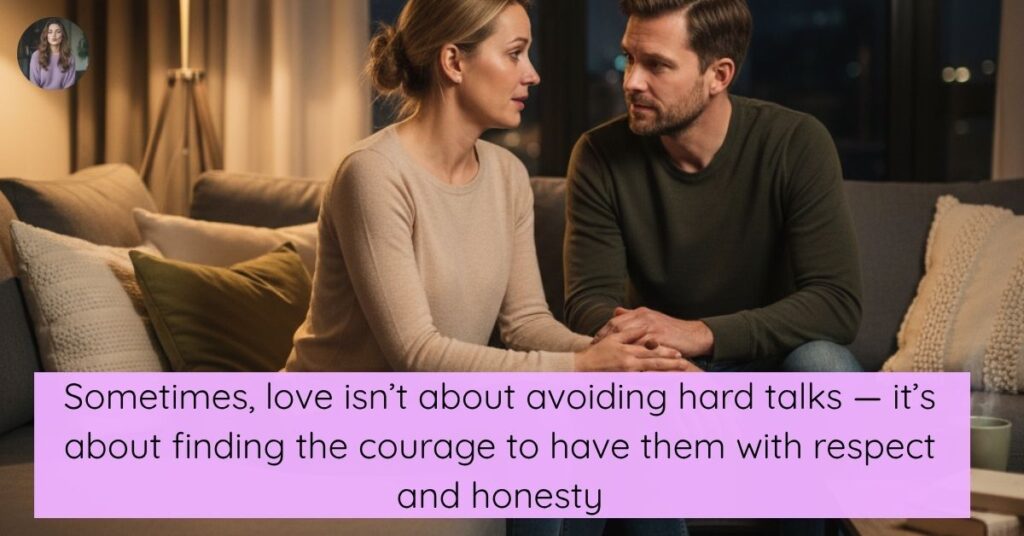
She sat across from him, tears in her eyes, wondering why he simply couldn’t get it.
She recalled the moment: “do you understand where I’m coming from?” she asked. His response? A hollow “yeah,” followed by silence. It felt like he just wanted the conversation to end – leaving her hurt, unseen, and exhausted.
As a relationship expert, I’ve met with innumerable women who wonder, “Why won’t he get it?”.
When the sorrow stems from emotional navigation, what these women generally seek is deceptively simple: acknowledgment rather than perfection.
A sincere apology, a glance in their eyes, a moment of “I see you, I hear you, and I care.” However, the talk generally ends with “okay… okay… okay” and no significant connection is made.

The Issue: He’s not Acknowledging You
According to your perspective, the pattern goes as follows: you try to explain why you’re upset, you urge him to understand where you’re coming from, but all you get is minimal verbal acknowledgement – “yeah” or “okay” – and no true dialogue or resolution.
You communicated your wish to him: “I wish you would apologise and mean it…” “I wish you’d hug me and remind me to breathe…” But it doesn’t seem to click.
It doesn’t matter whether you’re moody (you admit you can be). When you are vulnerable, it is important to consider the answer you receive – or do not receive.
What you’re experiencing is a lack of emotional connection and mending from him.
Here’s the thing: research continually demonstrates that apologies are important. When they are sincere, they help to rebuild trust and enhance relationships. However, when they are absent or shallow, the pain intensifies.
Why this happens
1. He may not recognise the ‘mistake’.
He may sincerely believe he has done nothing wrong — or that the issue is your mood rather than his reaction.
When he claims you’re “trying to change him,” he may imply (even if poorly phrased): “I feel judged or pressured when you point out what I could have done differently.” Unfortunately, the phrase puts you on the defensive when you are already in pain.
2. He lacks tools for emotional change.
Not everyone is predisposed or taught to respond with empathy, vulnerability, and repair. According to couples studies, the quality of an apology – rather than simply saying “I’m sorry” – influences how the affected partner feels acknowledged and cared for.
If his “sorry” is simply “yeah okay” with no acknowledgement of responsibility or future action, it does not operate as mending.
3. He is concerned that doing so will require him to give up something more important.
Some men see genuine apologies or emotional support as weakness or allowing the other person to have control.
To prevent what feels like vulnerability, they withdraw to basic responses (“okay”, “yeah”). Meanwhile, you feel abandoned in the emotional depths of the connection.
4. Mismatch between love languages and emotional requirements.
You seek emotional support (“hug me…tell me to breathe”). He may resort to transactional replies (“I’ll stop doing X”) or avoid emotional labour entirely.
Even if the other partner is “present” physically, resentment grows when one partner’s emotional needs are not addressed consistently.

The Stats You Need to Know
- According to research, saying you’re sorry is one of the few actions that can lessen conflict while still strengthening connection in a relationship.
- In a recent study, high-quality apologies (those that acknowledge hurt, admit responsibility, and promise improvement) were consistently connected with better relational outcomes, while missing or thin apologies were perceived negatively.
- A study of couple-related apology research discovered that repair behavior (making amends, expressing understanding) is essential for repairing closeness.
So, what this boils down to is that he isn’t just refusing to apologize; he’s also refusing to engage in the emotional mending dance that you’re requesting.
How I Suggest We Help You Fix This — Especially Tailored For You
Here’s how we can walk this together, as a woman who wants to be acknowledged, respected, and emotionally connected:

1. Clarify Your Emotional Need For Him.
Use a calm moment (not a heated debate) and say something like: “When I say I’m upset and ask ‘do you get where I’m coming from?’, what I really need is for you to say something like: ‘I understand you feel [describe emotion] because of [this behavior] and I’m sorry.'”
Then I’d like a hug or your hand on my back to experience the ‘I’ve got you’ moment.”
This offers him exactly what he needs while also providing him with a way to reply.
2. Invite Him to Participate in the Repair Ritual.
Explain that when he simply says “okay” without saying anything else, you feel as if you are still carrying the weight of the moment alone.
Ask him, “Could we try this: when I say I’m hurt, you say ‘I’m sorry for [X], I understand you felt [Y]’?” Then you ask, “What can I do now to make you feel better?”
At such time, you might request a hug or another comforting gesture. Make it smaller. Make it specific.
3. Use an organized tool, such as the one I teach in The Devotional System.
Because you’ve tried to explain several times and been met with “yeah/okay”, it’s possible that his emotional processing method differs from yours.
The Devotion System provides a guided framework that allows you to arrange your emotional needs and have him reply in a language you understand, so you’re not only repeating but also triggering certain patterns of behavior and communication. (I will only say this once more.)
It can help you:
- Express your need in a non-accusatory way
- Frame the behaviour you want him to understand (not in the middle of fight)
- Create a safe environment for him to learn the repair response
- Protect yourself from the repeated emotional toll of being unheard
4. Develop a “micro-repair” habit.
Because you can’t always wait for a large apology (and neither can he), incorporate small moments of connection to help you cope with the hurt.
For example, after work, take 5-10 minutes to unwind by sharing one thing you noticed about the other that day.
“I noticed you brought in coffee for me” => “That meant a lot.” Over time, this increases his emotional responsiveness, making you feel more seen.

Self-Care Means Protecting Yourself From Emotional Neglect.
You continue to carry your emotional self even while you attempt to invite change. Recognize that being ignored or minimized might lower your self-esteem.
So you must maintain a standard: if he continues to refuse to interact despite numerous attempts, you must reconsider how much work you are willing to use.
You can insist on emotional healing as part of the partnership, not just physical connection.

What happens if he refuses to change?
If he continues to react with “okay” and shuts down, you must decide if he understands but chooses not to engage, or he truly does not comprehend and does not want to learn.
The distinction is important. If it’s the latter, it’s possible that your relationship expectations (emotional attunement and healing) don’t match his capability or willingness.
The Devotion System assists in assessing whether a connection can suit your long-term needs, rather than just repairing it.

Conclusion
You are completely correct; sometimes it is as simple as saying “I’m sorry” or “I understand” and hugging you, grounding you, and acknowledging your grief.
However, “simple” does not imply “easy” — especially when the other person does not recognize the pattern or knows how to enter it.
As your relationship expert, I recommend that you model what you need, engage him into the healing dance, and use a systematic framework (such as The Devotion System) to help you both into emotional responsiveness.
You deserve to be heard, comforted, and connected. The real question is, will he enter the space and do that with you?
You May Also Read: How to Set Healthy Boundaries in a Relationship? (so you both feel heard, safe, and happy)